

WHO?
I’m Ismael Perez León and I currently live in Bordeaux, France. I grew up in the Basque Country, in the southwest of the country. Over the past few years, I’ve had the chance to live abroad, in Canada and across Latin America.
I’m a street and documentary photographer, and my relationship with photography began four years ago. I’ve always been passionate about cinema but I didn’t seriously consider photography until then.
I had also only a very limited knowledge of its history or culture when I started. I kind of stumbled into it in Montreal when a colleague lent me a Nikon FM2 film camera.
At first, I used it simply to document my daily life: friends, surroundings, travel. I was immediately drawn to black and white and I felt a natural pull toward certain visual styles. Early on, I bought 2 photo books: In My Room by Saul Leiter and London 1959 by Sergio Larrain. They gave me a sense of direction even if I had no idea how to produce similar results. Looking back, I think they shaped the way I see and photograph more than I realized.
I started shooting regularly, developing my own black and white film, and making my first darkroom prints in a photo lab.
I work as a web developer full time as a freelancer. Outside of photography, I enjoy traveling slowly and spending time in unfamiliar places. It helps me sharpen my eye, shift my perspective and stay open to different ways of seeing. I recently joined La Fabrique Pola in Bordeaux, an independent cultural space that brings together artists and collectives.

WHAT?
I love photographing in the street because it holds every genre at once : portrait, landscape, architecture, still life, etc. , all woven into daily life.
My approach is instinctive and direct, I mainly photograph in black and white and mostly in urban environments. I still shoot a lot of film (probably 80% of the time) but for practical reasons (cost, time, flexibility) I’ve been using digital more and more.
Shooting in the streets can be intimidating so I often need time to observe and read the room before I can blend in. I think I shoot relatively little and I tend to keep only the images I feel could eventually work as part of a series or a larger narrative.
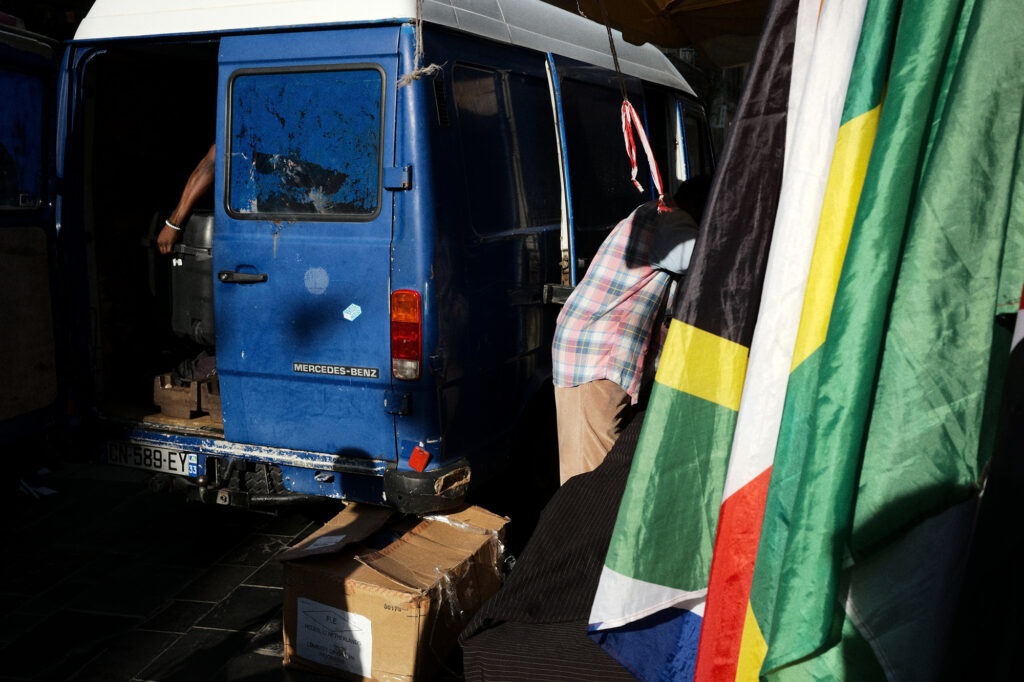
When I first started taking photos, I was obsessed with light. I didn’t know how to use it, I was simply drawn to contrast. I was also fascinated by images from photographers like Alex Webb, where everything feels perfectly layered. Over time I’ve become more focused on composing carefully according to the scene. I tend to prefer images that are less striking but more grounded, working with what’s actually in front of me.
The subjects that catch my eye are fairly classic in street photography: visual mimicry, spontaneous gestures, geometry, repetition, echoes between people and their surroundings.
One theme I keep returning to especially in recent months is magical realism: a way of seeing the world where ordinary life feels slightly askew, where something uncanny or poetic exists just below the surface. I try to create images that leave room for ambiguity, suggestion, and quiet tension.


WHERE?
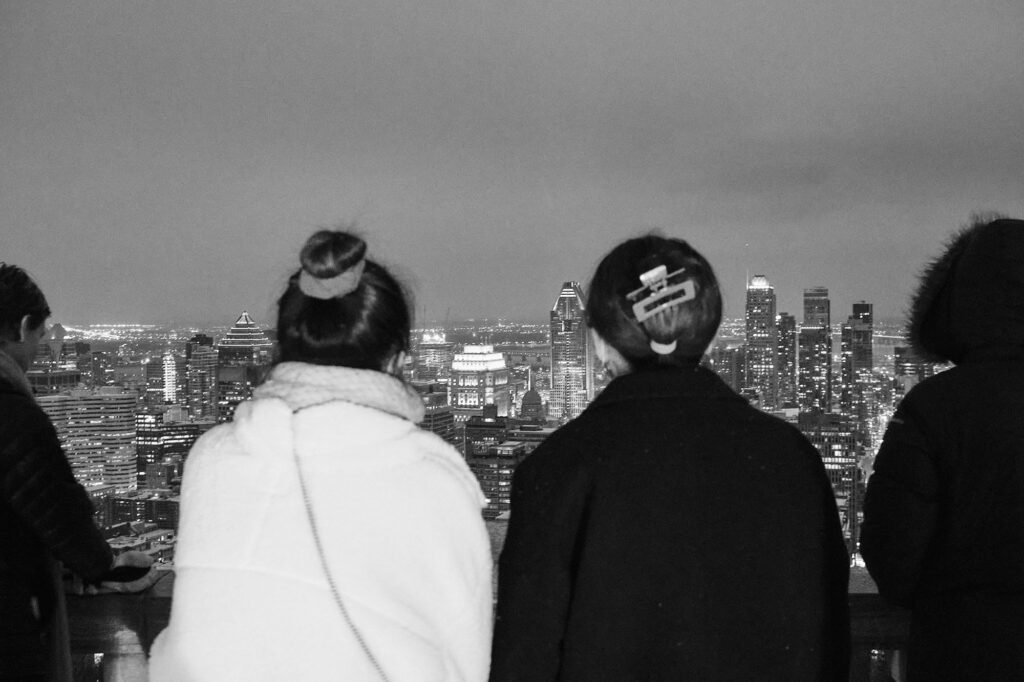
I photograph mostly in Bordeaux, France, where I live. But I tend to be the most productive when I’m away. I recently came back from a two-week road trip through Germany, Denmark, and Sweden and I think I’ve never shot so much in such a short span of time. Travel and photography are deeply intertwined for me.
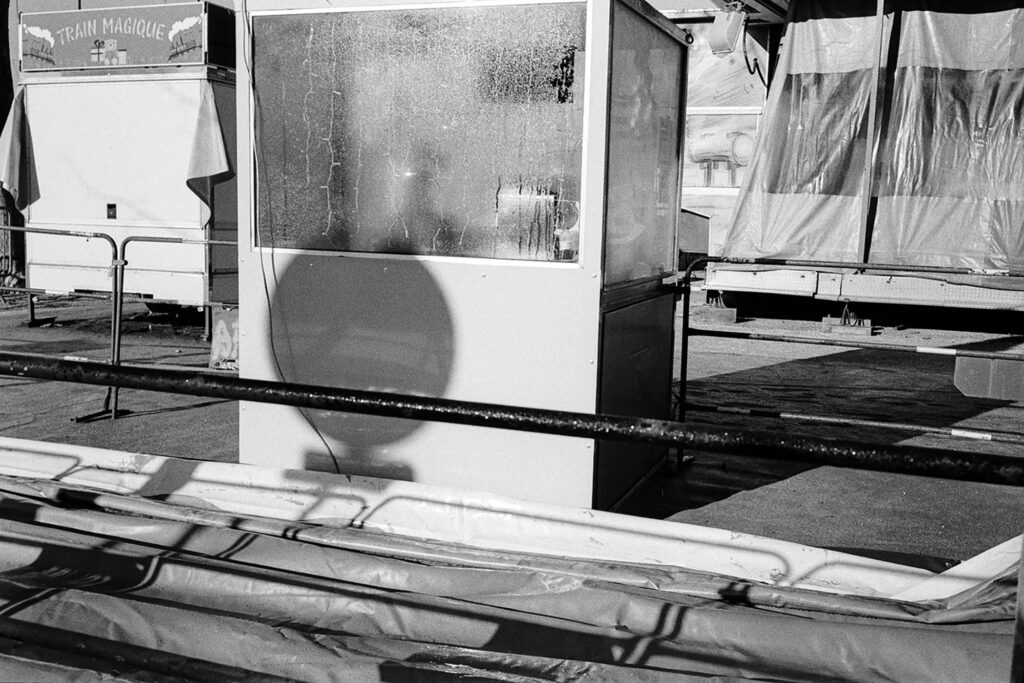
Some environments make street photography feel more natural: flea markets, festivals, funfairs, community events, places where people are aware they’re in public and often performing some version of themselves. I think of Mark Steinmetz’s book Carnival and how those temporary spaces blur the line between the staged and the spontaneous.
That said, I miss Latin America, where the street is still a truly democratic space. Commerce, meals, social life, conversations, so much happens outdoors. In many cities and towns I visited, the street felt like an extension of the home.

WHEN?
I try to shoot every day, usually in the late afternoon and especially when the light is good. I work as a freelance web developer, so my schedule can vary. During quieter periods, I’m lucky to be able to spend more time photographing and at different hours of the day. The downside is that photography comes second: it’s not my main job and I wish I could dedicate more time to it.
Lately, I’ve started thinking that early mornings might actually be the most interesting time to shoot; both for the light and for the kinds of situations you come across.
One thing that always motivates me: flipping through a good photobook before heading out. It’s a great way to get into the right mindset and feel more present in the world.


WHY?
There are many reasons, but I think it starts with a deep fascination for people. Carrying a camera is both a way of seeing and a way of entering: it gives me permission to approach, to observe, to connect somehow. In a way I’ve always done this: walked through the streets, watched strangers, imagined stories. The only difference is that now I have a camera in my hand.
Photography brings me calm, it anchors me. I find it meditative, not in a passive way, but in the way it forces me to be alert and attentive. I can’t control what happens around me but I can control how I respond, how I frame, what I decide to include (and what I leave out).
I’m also fascinated by storytelling through photography not by what’s shown but by what’s missing. The edge of the frame, the off-screen presence, the ambiguity: these are the things that keep me coming back. Knowing when to begin a story and when to end it is still something I’m trying to learn.
Photography also helps me train my eye. Every time I discover a new artist, a book, or a visual language (even if it’s far from my own work) I try to absorb something from it. This medium is cumulative: we build on the work of others, knowingly or not. Recently, seeing the works of Sarah Van Rij, Robert LeBlanc or Thomas Prior has completely shifted how I think about color, geometry and distance.
That said, what I love most is being outside. Walking, watching, looking for something I don’t yet understand. But like many street photographers, I find it hard to sit still and edit. I often think of Winogrand and his thousands of undeveloped rolls. You can’t be everywhere at once and I’d rather be out there.

